



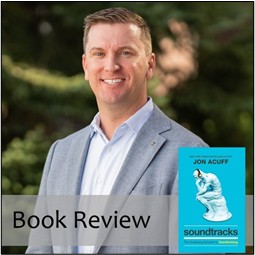
By Marc C. Shaffer
Every once in a while, you read a book that gives language to something you’ve experienced for years but never quite articulated.
That’s how I felt reading Soundtracks by Jon Acuff.
As a financial advisor and business owner, I spend a lot of time talking with people about numbers, plans, and long-term goals. What I’ve learned over the years is that money decisions are rarely just about money. They are about the stories we tell ourselves. They are about confidence, fear, identity, and the quiet narratives running in the background. Acuff calls those narratives “soundtracks.” And he’s exactly right.
The Power of the Internal Narrative
In Soundtracks, Acuff makes a simple but powerful claim: your thoughts drive your actions. When you repeat a thought often enough, it becomes a soundtrack. When that soundtrack plays long enough, it shapes your outcomes. Some soundtracks are helpful. Others quietly sabotage progress. I see this play out in financial planning all the time:
- “I’m just not good with money.”
- “Investing is too risky.”
- “It’s too late for me to catch up.”
- “Successful people are different than me.”
These thoughts feel factual. They feel permanent. In many cases, they are simply well-rehearsed narratives that have gone unchallenged. Acuff’s insight is that these patterns can be examined and rewritten.
Overthinking and Decision-Making
One of the most practical insights in the book is Acuff’s take on overthinking.
He defines overthinking as when what you think gets in the way of what you want. That shows up frequently in wealth management and retirement planning. Some people avoid financial decisions because they feel overwhelmed. Others analyze every headline, every market movement, and every potential risk. Both patterns can delay meaningful progress. Overthinking often sounds like this:
- “What if the market crashes tomorrow?”
- “What if I make the wrong decision?”
- “What if I fall behind?”
Those questions may feel responsible. In some cases, they simply reinforce hesitation. Acuff does not suggest ignoring risk. He encourages replacing broken soundtracks with ones that are true, helpful, and actionable. That framework applies well beyond personal development.
Replacing, Not Ignoring
What I appreciate most about Soundtracks is that Acuff focuses on replacement.
You don’t silence negative thoughts by pretending they do not exist. You replace them with better ones.
In my book One For All, I write about shared beliefs and intentional culture. Soundtracks operate the same way at the individual level. When you choose a healthier internal narrative, your decisions often begin to align with that belief. For example:
Broken soundtrack: “I’ll never get ahead financially.”
New soundtrack: “If I follow a disciplined plan, progress can build over time.”
Broken soundtrack: “I’m bad at investing.”
New soundtrack: “I can learn and work with professionals who guide me.”
Those replacements are grounded and forward-looking. They create momentum.
The 3-Part Test
Acuff introduces a simple filter for new soundtracks:
- Is it true?
- Is it helpful?
- Is it kind?
When I read that framework, it immediately reminded me of the Rotary Four-Way Test, something that has shaped leaders and communities for generations:
- Is it the truth?
- Is it fair to all concerned?
- Will it build goodwill and better friendships?
- Will it be beneficial to all concerned?
The parallels are striking. Both frameworks challenge us to slow down and examine what we are repeating, whether in conversation or in our own thoughts. Both elevate truth, helpfulness, and long-term impact.
Many high achievers hold themselves to extraordinary standards. Physicians, business owners, executives, and entrepreneurs often carry an internal voice that is far harsher than anything they would say to a colleague or client. Financial stress can amplify that voice. Applying a simple filter, whether Acuff’s three questions or the Rotary Four-Way Test, introduces intentionality. It encourages thoughts that are grounded, constructive, and beneficial over time.
A kinder soundtrack does not lower expectations. It creates emotional sustainability. In long-term financial planning and investment management, sustainability often influences consistency. Consistency can affect outcomes over time.
The Connection to Financial Planning
While Soundtracks is not a book about investing, it has clear relevance to financial planning services and retirement income planning. Markets fluctuate. Economic cycles shift. Tax laws evolve. Those realities are external. The internal narrative often shapes how someone responds. A thoughtful retirement investment strategy requires discipline. Discipline requires belief. Belief is fueled by soundtracks. When someone believes…
- “Volatility is part of investing.”
- “Long-term planning requires patience.”
- “I can control my behavior even when markets feel uncertain.”
…they may tend to make steadier decisions. In some cases, one of the most valuable roles a fiduciary financial advisor plays is helping clients maintain constructive soundtracks during uncertainty. Portfolio management services address the numbers. Guidance and perspective often address the mindset. Both matter.
Community and Shared Soundtracks
In One For All, I emphasize the power of shared culture. Families, teams, and organizations operate with shared narratives.
- A family might carry a generational soundtrack of scarcity.
- A business might operate from a soundtrack of innovation.
- A community might embrace a soundtrack of resilience.
- These narratives influence behavior across generations.
In estate planning conversations, we often ask clients what financial mindset they hope to pass on to their children. That question reflects more than asset allocation or inheritance tax planning. It reflects the story that will shape future decisions. Acuff’s ideas extend beyond individuals. They apply to leadership, legacy, and long-term wealth preservation strategies.
A Continued Conversation from All It Takes Is a Goal
This wasn’t my first time engaging with Jon Acuff’s writing. I previously reviewed his book All It Takes Is a Goal, which explores how clarity and focused action shape long-term achievement. That book centers on intentional progress. Soundtracks examines the internal dialogue that supports or disrupts that progress. The connection between the two is clear. Goals provide direction. Soundtracks influence whether you believe you can pursue them. In financial planning, this distinction appears often. Someone may have clearly defined retirement goals, business growth objectives, or wealth management priorities. The underlying thoughts can determine whether those plans gain traction. If you would like to read that earlier review, you can find it here:
Taken together, these two books offer a helpful framework. One focuses on structured progress. The other addresses the mindset that sustains it.
Final Thoughts
Soundtracks is a practical guide to upgrading the internal narratives that shape daily decisions. For entrepreneurs, professionals building wealth, retirees navigating transitions, and families thinking about long-term legacy, the book offers valuable perspective.
It may prompt you to consider:
- What thoughts do I repeat most often?
- Are those thoughts helping me move forward?
- What might change if I intentionally rewrote them?
Financial success often involves more than numbers. It involves clarity, consistency, and confidence. Internal narratives influence each of those factors. In some cases, this is where families choose to work with a financial planner or retirement planning advisor. A sound strategy and a constructive mindset can reinforce one another over time.
The opinions expressed herein are those of certain Searcy Financial® Services, Inc. personnel and are subject to change without notice. The opinions expressed are as of the date of publication and are subject to revision due to changes in the market or economic conditions, which may not necessarily come to pass. Any opinions, projections, or forward-looking statements expressed herein are solely those of the author, may differ from the views or opinions expressed by others in the firm, and are meant for general informational purposes as of the date indicated. Searcy Financial® Services, Inc. is not compensated by this vendor, nor are there material conflicts of interest that would affect the given statement.