



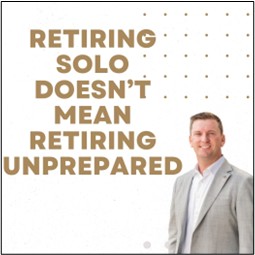
By Marc C. Shaffer
For more than 40 years, my parents did life together.
They raised a family, built routines, shared responsibilities, and made plans as a team. Shortly after my mom’s 70th birthday, my dad and I lost her to breast cancer.
Grief changes everything but so does the sudden reality of becoming financially solo after decades of partnership.
In the months that followed, I watched firsthand how my dad’s long-term planning and cash flow shifted. Expenses that once felt manageable became heavier when there was no longer someone to share them with. Tasks that had always been handled informally between spouses now required outside help. And decisions that were once made together now rested on one set of shoulders.
This experience has stayed with me, both personally and professionally. It is one of the reasons I am passionate about helping clients who are retiring solo, whether by choice, circumstance, or transition.
About one in four Americans over age 65 live alone, and that number continues to grow. Planning for retirement without a built-in partner requires intention, honesty, and a different kind of preparation. Below are five expenses that solo retirees often underestimate, not because they are careless, but because many traditional retirement conversations were built around couples.
1. Paying for help that used to be shared
Living with a partner often means having built-in help, such as someone to lift heavy items, drive you home after a procedure, watch the house, or care for a pet. When you live alone, those same needs usually require paid assistance. Hiring a handyman, arranging transportation, paying a pet sitter, or getting help at home may seem like small, occasional costs. Over time, however, they can add up. These are not luxury expenses. They are essential to maintaining quality of life. For many solo retirees, budgeting a few hundred dollars per month for hired help is realistic. Planning for these costs in advance reduces frustration and helps preserve independence later on.
2. Housing costs that no longer split two ways
Housing is often the largest expense in retirement, and it does not decrease simply because one person lives there. After my mom passed, I realized that my parents had always split expenses while keeping separate bank accounts. That arrangement worked well during their marriage, but it also made the transition to solo living more noticeable. Costs that had once been shared between two people suddenly fell on one person alone.
Utilities, internet, insurance, property taxes, and maintenance remain largely the same whether there is one person in the home or two. When those expenses are no longer divided, cash flow can change quickly. No single bill feels overwhelming, but the cumulative effect is significant. Couples often share these fixed costs, sometimes supported by two incomes during their working years. Solo retirees must cover the full amount themselves, and that reality needs to be reflected in financial planning.
This does not mean everyone should rush to downsize. It does mean housing choices deserve thoughtful consideration. In some cases, downsizing earlier can create flexibility later. In others, shared living arrangements or creative housing solutions can reduce financial pressure without sacrificing comfort. The goal is not to minimize space. The goal is to align housing decisions with long term cash flow and personal energy.
3. Creating your own emergency backup plan
One of the biggest differences between partnered and solo retirement is the absence of automatic backup. If you are sick, injured, or simply having a difficult week, there may not be someone nearby to notice or step in. That does not mean you are vulnerable. It means you need a plan. Medical alert systems, grocery and medication delivery, and home care services can all be part of that safety net. Identifying neighbors, friends, or professionals you trust before you need them is just as important. Planning for emergencies is not pessimistic. It is empowering. It helps you remain independent longer and reduces stress for everyone involved.
4. Long term care often starts sooner when you are solo
Most people underestimate the cost of long term care. Solo retirees often need support earlier because there is no partner to assist with daily tasks as needs increase. Home health care, assisted living, and nursing care can be expensive. Long term care insurance, when appropriate, can be part of the solution if it is explored early enough. Understanding how Medicaid works in your state also matters, even if you hope never to rely on it. This is an area where early conversations lead to better outcomes. Waiting until care is needed limits options. Planning ahead helps preserve choice.
5. The emotional cost that shows up financially
Loneliness is not only an emotional experience. It can also influence spending. Eating out instead of cooking for one, shopping for comfort, joining clubs, or booking group travel for connection all involve costs. None of these choices are wrong. In fact, community is essential to wellbeing. The key is recognizing that social connection has a financial component. Building relationships and routines before retirement can reduce both loneliness and unexpected spending later. Community does more than enrich life. It also supports financial stability.
Planning ahead creates freedom
Retiring solo does not mean you are behind or at risk. It simply means your plan needs to reflect your reality. The most successful solo retirees I work with do a few things well.
- They downsize intentionally, not reactively.
- They build a care team early.
- They document healthcare wishes clearly.
- They plan for help instead of assuming it will not be needed.
Watching my dad navigate life after losing my mom reinforced something I already believed. Planning is not about predicting the future. It is about preparing for change with compassion and clarity.
If you are retiring solo, or adjusting to life after a transition, you are not alone. With the right planning, independence and security can coexist. And the earlier the conversation starts, the more options you keep on the table.
If this topic resonates with you, we welcome the chance to talk through what solo retirement planning could look like for your life. Thoughtful preparation today can make tomorrow feel far less uncertain.